
Nutrition & recovery
Creatine: how much should you take, and when?
More strength in training, research into possible brain benefits and a simple daily routine: the useful figures and practical guidance on creatine.
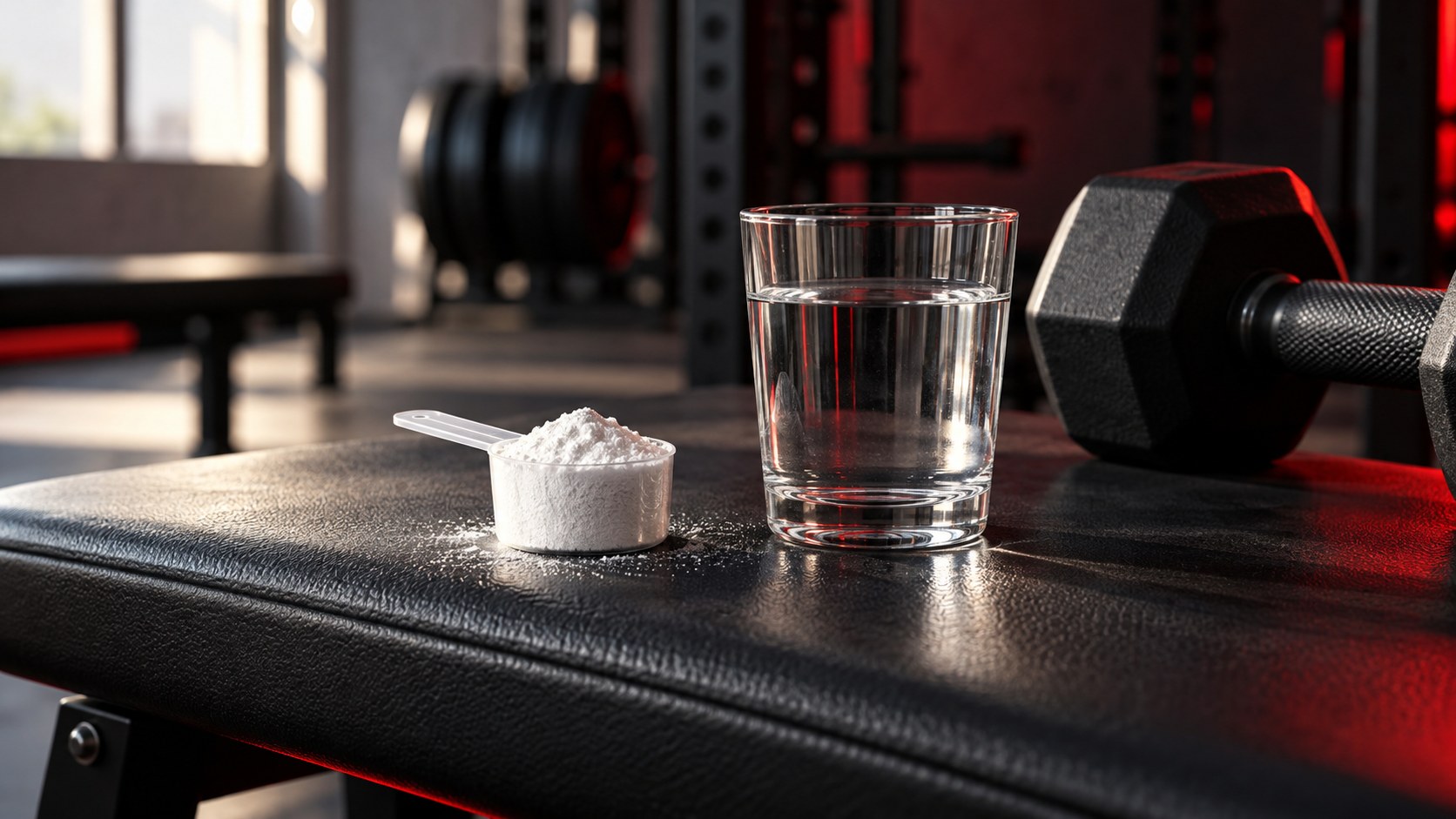
Creatine monohydrate is one of the most thoroughly studied supplements for strength training. Its main benefit is supporting short, intense, repeated efforts.
Why it can help
It helps muscles quickly replenish the energy used during exercise. In practice, it supports weight-training sets, sprints and explosive efforts. Combined with training, it can improve strength gains.
Strength gains in numbers
- 20 % improvement versus 12 % with a placebo: the average in a review of 22 studies published in 2003, a difference of 8 percentage points.
- +4.4 kg in upper-body tests and +11.4 kg in lower-body tests: average additional gains with creatine versus a placebo in a 2024 meta-analysis of 23 studies in adults under 50.
These figures compare groups following training programmes. Results vary with exercises, protocols and individuals; most participants were men.
Brain and memory
The brain also uses creatine for energy. Trials suggest benefits in certain stressful situations, particularly sleep deprivation. Evidence is still insufficient to claim everyday memory improvements in healthy, well-rested adults: there is no reliable percentage to promise. High experimental doses do not establish an ideal dose for everyone.
How to take it
- Form: creatine monohydrate.
- Usual dose: 3 to 5 g a day, every day, including rest days. 5 g is a practical guide, not a universal upper limit.
- Men and women: sex alone does not dictate a different dose. Some very muscular athletes use 5 to 10 g; the dose depends on the context.
- Timing: choose a time you can easily remember, such as with a meal. There is no compulsory post-workout window.
- Drink: water is fine; grape juice is optional.
No loading phase is needed: regular intake gradually increases stores over a few weeks. Loading speeds up that stage; it is not necessary to establish a lasting routine.
Kidney disease, pregnancy, breastfeeding or medical treatment: seek medical advice before starting. This guide provides general information.
Sources
Strength in % — 2003 review · Strength in kg — 2024 meta-analysis · Brain — 2026 review · Memory — 2026 critical analysis · Dosage — ISSN · Intake and timing — 2025 review.
Illustration created for the Club Journal.
The conversation (1)
Super merci
Sign in to join the conversation.